
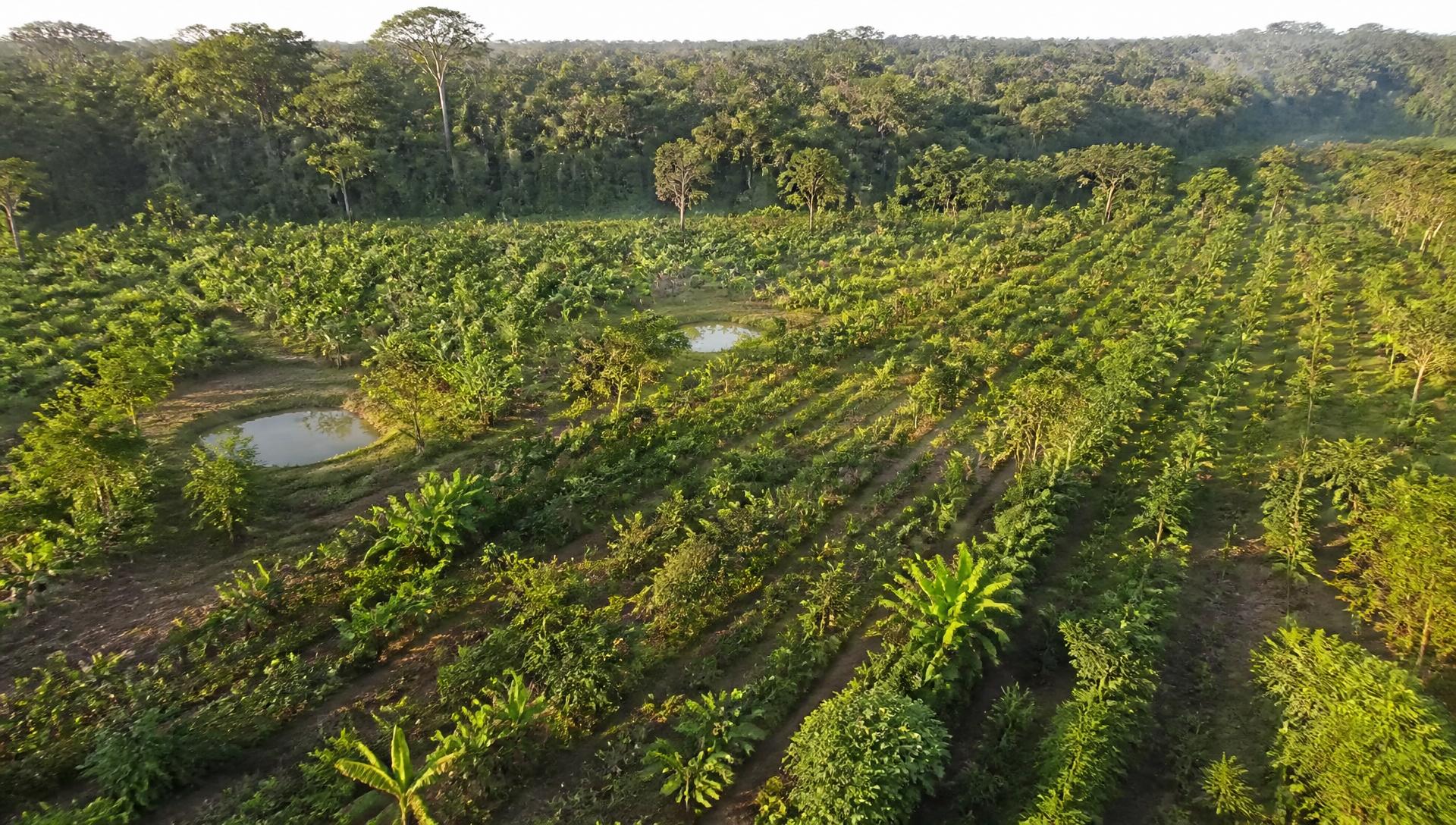
A forest that also feeds people
A food forest, or agroforestry system, is land planted to behave like a young forest while also producing food. Instead of a single crop in neat rows, different plants grow side by side and support one another. Some give shade, some improve the soil, and some produce fruit, nuts or other crops that people can eat or sell.
The idea is old. Farming families in many tropical regions have long grown food beneath and between trees. What is new is applying it deliberately to land that has been cleared and worn out, so that it becomes productive and green again.
The layers of a food forest
A food forest is built in layers, each using light, water and space in its own way.
- Tall native trees that form the canopy, offer shade and bring back the structure of a forest.
- Fruit shrubs and smaller trees in the middle layer that produce a harvest within a few years.
- Food and cash crops close to the ground that give the farmer an income early on.
Why mixed planting beats monoculture
A single crop is vulnerable. One pest, one disease or one bad season can wipe out the harvest. A mix of species spreads that risk, protects the soil and gives birds and insects a place to live.
For farming families, mixed planting also means a more varied diet and several sources of income across the year, rather than one harvest and one buyer. That makes it more likely the trees are cared for in the long run.
Your contribution, linked to a location
Every €10 funds one GPS-located agroforestry plot with five trees or shrubs in Brazil. Your account shows the plots Assigned to you, their coordinates and available field records. Individual purchases do not include CO2 rights and do not replace reducing your own emissions.